Guest Wi-Fi has become a crucial part of many businesses, but you can’t simply spin up a WLAN and let users on it. It needs to be secure and segmented not only from corporate traffic but from other guests as well. A misconfigured guest network is one of the easiest lateral movement vectors into your production environment, and most organizations underestimate the operational lift required to keep it locked down.
Then there is BYoD. Internal and corporate users want to connect their personal devices, but IT teams don’t want to deal with generating access codes, managing email approvals, or maintaining separate onboarding workflows for every location. It’s just another operational burden and just something else to worry about. They also need visibility into which internal users are leveraging guest access and what devices they’re bringing on.
For BYoD and SSO, Arista with AGNI and Juniper Mist with Access Assurance raised the bar by introducing cloud-based NAC with integrated Single Sign-On for BYoD. This was raising the bar from the on-prem NAC/RADIUS approach.
For the tunneling scenario, designs I have done previously generally included tunneling guest traffic to a central location and terminating it on a separate firewall or interface. This architecture typically required:
- Central hardware to terminate tunnels from each remote location
- A dedicated DHCP server or scope for guest addressing
- A firewall or at minimum, an additional interface/zone on the existing firewall for outbound guest traffic
- Licensing for controllers, tunnel endpoints, or NAC appliances
- Ongoing level of effort: configuration, routing, security policies, accountability, and upgrades across every component
Multiply that by 10, 50, or 200 sites, and that gives you an idea how the level of effort increases.
I had a chance to configure Nile Secure Guest service and explore all the different options available within it:
- 30-second setup
- No hardware, no software, no licensing
- BYoD with integrated Single Sign-On
- Per-host isolation: every guest device is isolated from every other guest and from all corporate resources, with no additional configuration
- Cloud DHCP included: no need to dedicate on-prem IP scopes for visitors
- Traffic tunneled to the nearest Nile Point of Presence (PoP) and forwarded directly to the internet — your firewall never sees guest traffic
This solution eliminates not only all those infrastructure components but also the operational lift that comes with them.
Beyond the operational efficiency, shifting the accountability of visitors and guests to Nile Secure Guest has two additional outcomes worth considering: improved compliance posture and potential reductions in cybersecurity insurance premiums.
I have previously written about Nile’s Cloud Guest service and how to configure it, check it out Effortless Guest Wi-Fi with Nile: From Zero to Ready in Minutes.
What I did not get a chance to discuss was all the different configuration options available within this service. Nile actually provides three distinct guest access models:
1. External Captive Portal Integration: This option is for organizations that already have a captive portal infrastructure in place your existing RADIUS server, portal appliance, redirect rules, and all the configuration that comes with it. Nile acts as a pass-through in this model, handing off authentication to your existing system. The guest workflow stays the same, which makes this a practical choice during migrations. Just keep in mind you’re still maintaining all of that infrastructure. The hardware, the policies, the upgrades that operational lift doesn’t go away. It’s the same architecture, just with Nile handling the wireless transport underneath.
2. Nile Hosted Guest Portals: Nile provides built-in portal options that require no external infrastructure:
- Terms & Conditions (Click-through) Guests accept your T&C and get access. Simple, no credentials required.
- Email Approval Guests enter the email address of the employee they’re visiting. That employee receives an approval/deny notification. This creates an accountability trail you know who sponsored each guest.
- Access Codes Admins generate time-limited access codes for specific events, conferences, or visitor groups.
3. Nile Secure Guest Service: The full cloud-offload option. All guest traffic is tunneled to the nearest Nile PoP, completely bypassing your on-prem infrastructure. DHCP, DNS, isolation, and internet breakout are all handled by Nile.
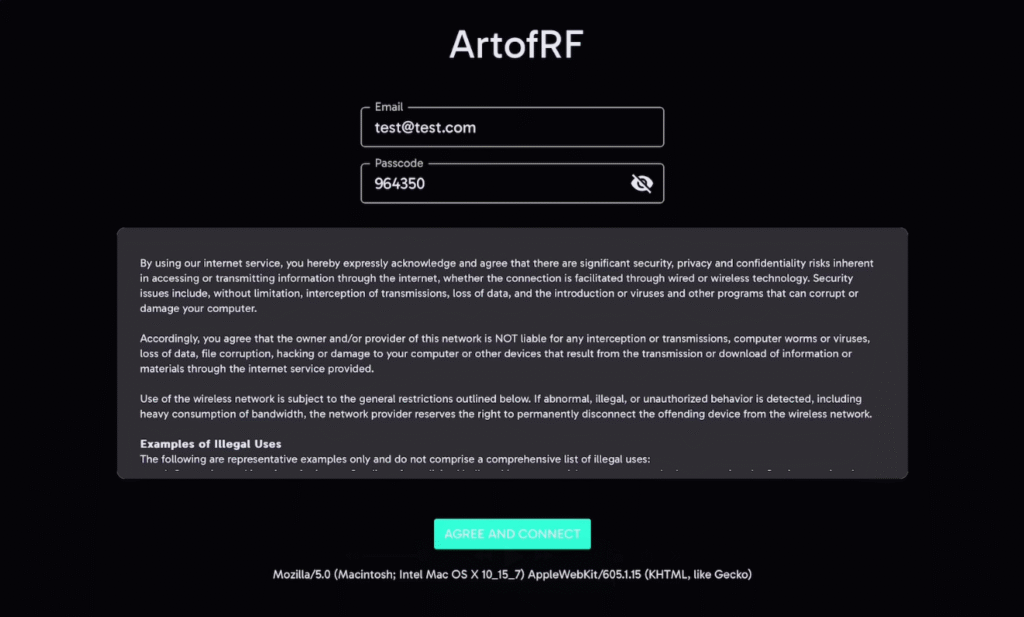
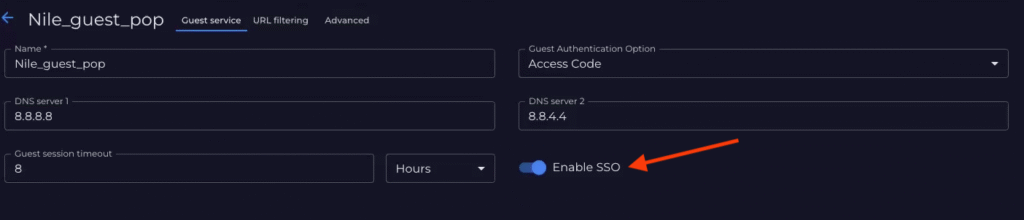
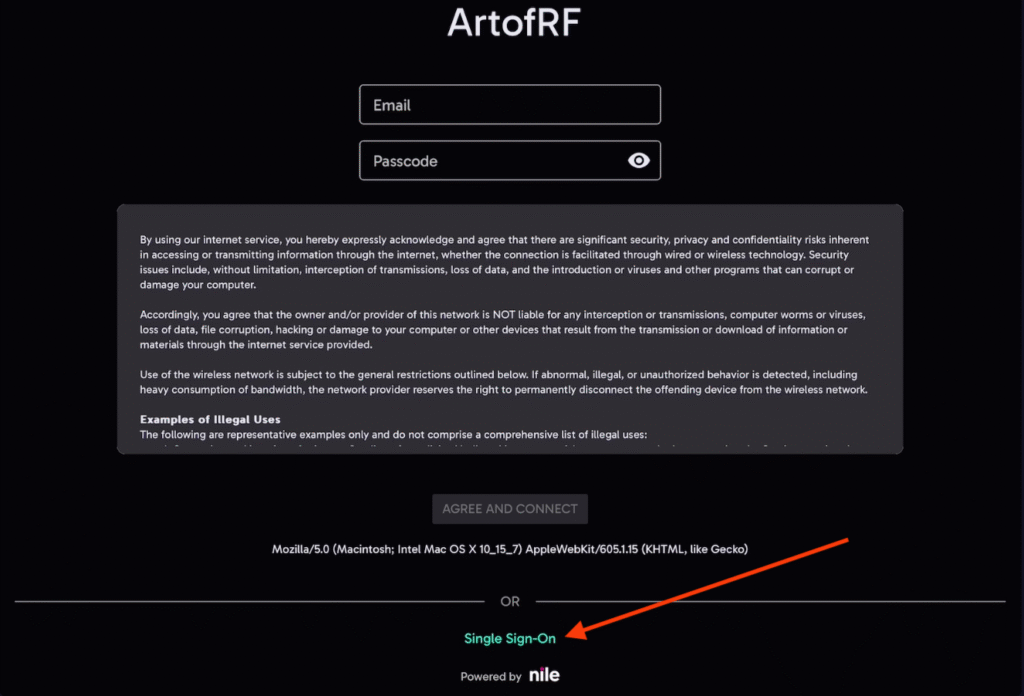
Nile Secure Guest also integrates Single Sign-On for BYoD scenarios. Once your Identity Provider (Okta, Entra ID, etc.) is connected to Nile, you can enable SSO directly on the guest or BYoD SSID Open, WPA3-Personal, or Enhanced Open. An employee connects their personal device, gets redirected to their familiar SSO login, enters their credentials and they are connected. No access codes, no IT tickets, no separate onboarding workflow. The identity follows them, and Nile’s built-in per-host isolation handles the rest. It’s the same Nile Secure Guest service SSO is just another configuration option within it.